Metals 101: aluminium, mild & stainless steel

What are the nuances between the different metals and finishes we use across our range of purpose-designed outdoor furniture? Read on for a practical guide to help choose the right one across commercial and residential outdoor settings.

Durability & flexibility

In commercial environments, durability isn’t just desirable – it’s essential. Aluminium outdoor furniture offers exceptional resilience against corrosion, making it well-suited to hospitality venues, hotel rooftops, and poolside areas exposed to coastal air or high humidity. Because of its comparative lightness, this metal is also particularly useful where furniture is frequently rearranged or stacked. The Seam Collection, whose seat and back panels are crafted in powder coated aluminium (on a steel frame), thrives in these kinds of applications where mobility and flexibility are key.

When treated with a high-quality powder coat, mild steel becomes highly resistant to weathering, wear and tear, making it ideal for high-traffic spaces such as education campuses, health precincts, and busy workplace terraces. Our steel is triple processed to maximise its robustness, but this sturdiness doesn’t have to translate to a ‘heavy’ visual aesthetic. Volley, Jak and Jil leverage elegant mesh and striated textures to portray a visual lightness despite being formed in this heavier metal, which also forms sturdy structural frames for larger timber pieces like the Flint and Kink Tables and Benches.

Stainless steel, as featured on the Swing Chair, provides the highest inherent corrosion resistance of the group, particularly in coastal or marine-adjacent environments. Its alloy composition ensures long-term stability even in exposed conditions, offering minimal reliance on coatings while maintaining a refined, architectural aesthetic.

Straightforward maintenance

Commercial furniture that requires minimum upkeep helps ease ongoing costs and ensures the setting is a good choice not just at purchase point, but well into the future. Powder coated, zinc-plated and electropolished metals are easily maintained with basic and regular cleaning protocols like wiping with soapy water or non-abrasive cleaner with a clean cloth. All metals inherently, or are treated to, resist corrosion, and UV-resistant powdercoats further protect against fading. One thing to note is that in salty and exposed environments, stainless steel can become ‘tea-stained’ with slight discoloration caused by a build-up of environmental elements – purely cosmetic without affecting the structural integrity. This can be cleaned with soapy water (and some elbow grease) – or electropolishing greatly reduces the occurrence.


Spring cleaning guide

Electropolished frame on the Billy Chair, and on the Swing Chair at The International in Sydney designed by Woods Bagot (photo by Jonny Valiant).

Design potential

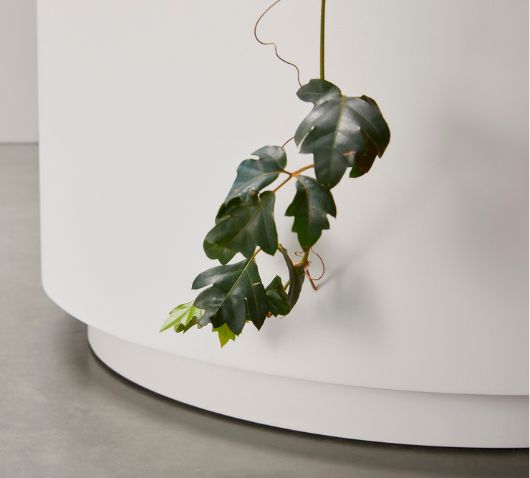
Tubular aluminium enables full creativity in terms of free-form shaping, for example on the frames of Trace and Rockpool. In sheet form it is also ideal for flat surfaces like seat and back panels (such as underneath the cushioned surface of the Voom) due to its comparatively light weight, whilst its excellent corrosion resistance makes it suitable for planters like Drum. Mild steel, with a heavier weight, is often used for its sturdiness in chair, stool and table bases (for example in Tidal and Pogo Collections), and will keep the price reasonably low. Stainless steel is the prime choice for minimal design with maximum strength and durability against the elements. It also offers the possibility of an electropolished finish on selected pieces like the Swing Chair and Billy frame – a shiny, mirror-like appearance that is a non-toxic alternative to chrome.

Value-extending refurbishment

One of the most sustainable and cost-effective advantages of aluminium, powder-coated mild and stainless steel furniture is their ability to be refurbished. All materials can be sandblasted, re-powder coated, and fitted with new components, extending the life and value of each piece for a significantly lower cost compared to replacement. For commercial projects – whether a hotel rooftop, university courtyard, or workplace terrace – refurbishment programs reduce waste, support sustainability objectives, and maintain a premium appearance with greatly reduced capital outlay. Embedding refurbishment opportunities into project planning allows clients to protect their investment, ensuring furniture continues to perform both functionally and aesthetically for years to come.


A rooftop refurbishment
Published 11 March 2026
Share

Latest Stories